User experience, commonly known as UX, has become one of the most important factors in digital success. Whether you run an eCommerce website, mobile app, SaaS platform, or business website, the way users interact with your digital product directly affects engagement, conversions, and customer satisfaction.
Today, Artificial Intelligence (AI) is transforming the way businesses design and optimize user experiences. AI helps brands understand user behavior, personalize interactions, automate tasks, and improve usability in ways that were impossible a few years ago.
Modern users expect fast-loading websites, personalized recommendations, smart search experiences, and seamless navigation. Businesses that fail to meet these expectations often lose customers to competitors with better user experiences.
In this blog, we will explore how AI can improve UX design, increase customer satisfaction, and help businesses create smarter digital experiences.
What is AI in UX Design?
Artificial Intelligence in UX refers to using machine learning, predictive analytics, automation, and intelligent systems to improve how users interact with websites, applications, and digital platforms.
AI can analyze large amounts of user data and identify patterns that help businesses optimize user journeys and improve engagement.
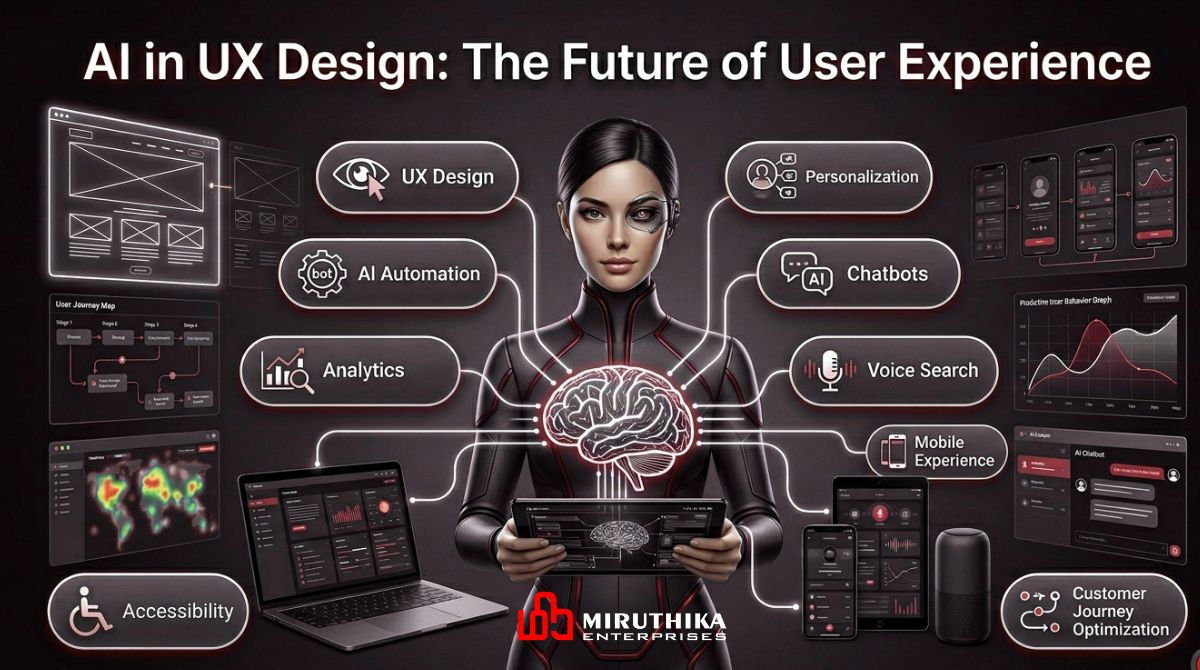
AI-powered UX can help with:
- Personalized experiences
- Predictive recommendations
- Voice search optimization
- Chatbots and virtual assistants
- Smart content delivery
- User behavior analysis
- Automated testing
- Accessibility improvements
The combination of AI and UX design allows businesses to create faster, smarter, and more user-friendly experiences.
Why UX Matters in Digital Marketing
User experience directly affects online visibility, customer retention, and conversions. Search engines like Google prioritize websites that provide positive user experiences.
A poor UX can lead to:
- High bounce rates
- Low engagement
- Poor conversion rates
- Negative customer perception
- Reduced SEO rankings
A strong UX helps improve:
- Website usability
- Customer trust
- Brand credibility
- Lead generation
- Customer satisfaction
According to Google Page Experience Guidelines, user experience signals play a major role in search visibility and website performance.
How AI Improves User Experience
1. Personalized User Experiences
One of the biggest advantages of AI is personalization. AI can analyze user behavior, preferences, location, browsing history, and interactions to deliver customized experiences.
Examples of AI Personalization
- Product recommendations
- Personalized content
- Suggested blog posts
- Customized email campaigns
- Smart notifications
Platforms like Netflix, Amazon, and Spotify use AI to recommend content based on user behavior.
Personalization helps businesses:
- Increase engagement
- Improve conversions
- Reduce bounce rates
- Build stronger customer relationships
AI-Powered Chatbots for Better Support
AI chatbots have become essential for modern websites. Users expect instant support, and AI-powered chat systems can provide 24/7 assistance without delays.
Benefits of AI Chatbots
Instant Responses
AI chatbots answer customer questions immediately.
Reduced Support Costs
Businesses can automate repetitive customer support tasks.
Improved Customer Satisfaction
Quick responses improve customer experience.
Lead Generation
Chatbots can collect user information and qualify leads automatically.
Popular AI chatbot platforms include:
- ChatGPT by OpenAI
- Drift
- Intercom
AI for Predictive User Behavior
AI tools can predict user actions based on historical data and browsing patterns.
For example:
- Predicting products users may buy
- Identifying pages users may exit
- Recommending next actions
- Detecting user intent
Predictive analytics helps businesses improve user journeys and reduce friction during the buying process.
Smart Search and Voice Search Optimization
Traditional search systems often fail to understand user intent. AI-powered search systems improve search accuracy by understanding natural language and context.
Features of AI Search
- Voice search support
- Auto suggestions
- Intelligent recommendations
- Semantic search
- Natural language processing
Voice assistants like Siri, Alexa, and Google Assistant rely heavily on AI technology.
Optimizing websites for voice search can improve accessibility and increase search visibility.
AI in Website Navigation
AI can help simplify website navigation by analyzing user behavior and optimizing menu structures.
AI Navigation Improvements
- Dynamic menus
- Personalized navigation
- Smart internal linking
- Contextual recommendations
Improved navigation helps users find information faster, reducing frustration and increasing engagement.
AI-Powered UX Testing
Traditional UX testing can take weeks, but AI-powered testing tools can analyze user interactions automatically.
AI UX Testing Features
- Heatmaps
- Click tracking
- Session recordings
- User journey analysis
- Automated usability reports
These insights help designers identify usability problems and improve website performance quickly.
Popular UX tools include:
- Hotjar
- Crazy Egg
- Google Analytics
AI for Accessibility Improvements
Accessibility is an important part of UX design. AI helps make websites more inclusive for users with disabilities.
AI Accessibility Features
- Voice navigation
- Screen reader optimization
- Automatic captions
- Image recognition
- Text-to-speech functionality
Improving accessibility also helps businesses reach wider audiences and comply with accessibility standards.
AI and UX Writing
AI tools can help create better UX copy and microcopy for websites and applications.
Examples include:
- Button text suggestions
- Error messages
- Personalized notifications
- Product descriptions
- User onboarding messages
Clear UX writing improves communication and reduces user confusion.
AI writing assistants can also help businesses create SEO-friendly content more efficiently.
AI for Faster Website Performance
Website speed is one of the most important UX factors. AI tools help optimize website performance by analyzing loading times and identifying issues.
AI Speed Optimization Features
- Image compression
- Lazy loading
- Smart caching
- Performance monitoring
- Code optimization
A fast website improves:
- User satisfaction
- SEO rankings
- Conversion rates
- Mobile usability
Google recommends fast-loading websites as part of its Core Web Vitals standards.
AI in Mobile UX Design
Mobile users now represent the majority of internet traffic worldwide. AI helps businesses improve mobile experiences through smarter interfaces and adaptive design.
AI Mobile UX Features
- Personalized mobile interfaces
- Gesture recognition
- Predictive typing
- Voice interactions
- Adaptive layouts
Mobile-friendly UX is essential for SEO and customer engagement.
How AI Helps eCommerce UX
AI has revolutionized eCommerce experiences by improving product discovery and personalization.
AI Features in eCommerce
- Personalized product recommendations
- Smart product filters
- Dynamic pricing
- AI-powered customer support
- Cart abandonment recovery
AI-driven UX helps online stores increase conversions and improve customer retention.
AI and Emotional Design
Modern AI systems can analyze user emotions through behavioral patterns and interactions.
This helps businesses:
- Understand customer frustrations
- Improve emotional engagement
- Build better user relationships
- Create human-centered experiences
Emotional UX design improves trust and customer loyalty.
Best Practices for Using AI in UX
1. Focus on Human Experience
AI should improve human interactions, not replace them completely.
2. Keep Interfaces Simple
Avoid overcomplicated AI features that confuse users.
3. Protect User Privacy
Always handle user data responsibly and transparently.
4. Test AI Features Regularly
AI systems should be monitored and improved continuously.
5. Use Data Responsibly
Collect only necessary user data to improve experiences.
Challenges of AI in UX Design
Although AI offers many advantages, businesses should also consider potential challenges.
Common Challenges
- Privacy concerns
- Data security risks
- Bias in AI systems
- High implementation costs
- Over-automation
Businesses should balance automation with human-centered design principles.
Future of AI in UX
AI technology will continue to shape the future of digital experiences.
Future trends include:
- Hyper-personalization
- AI-generated interfaces
- Emotion-aware systems
- Advanced voice interactions
- Predictive UX design
- Immersive AI experiences
Businesses that adopt AI-driven UX strategies early will gain competitive advantages in the digital market.
How Businesses Can Start Using AI for UX
Analyze User Behavior
Use analytics tools to understand customer interactions.
Identify UX Problems
Find areas where users struggle.
Implement AI Solutions
Start with simple AI features like chatbots or personalization.
Monitor Performance
Track user engagement and conversions.
Continuously Improve
AI systems should evolve based on user feedback and data.
Why AI and UX Matter for SEO
Search engines increasingly prioritize websites that provide excellent user experiences.
AI-enhanced UX can improve:
- Dwell time
- Engagement rates
- Mobile usability
- Website speed
- Accessibility
- Content relevance
These factors directly influence SEO rankings and online visibility.
Learn more about digital marketing and user experience strategies at:
Conclusion
Artificial Intelligence is transforming user experience design across websites, applications, and digital platforms. From personalization and predictive analytics to smart chatbots and accessibility improvements, AI helps businesses create more meaningful and user-friendly digital experiences.
However, successful UX design still depends on understanding human behavior, emotions, and expectations. AI should support human-centered design rather than replace it completely.
Businesses that combine AI technology with strong UX principles can improve customer satisfaction, increase conversions, strengthen SEO performance, and build long-term digital success.
As technology continues to evolve, AI-powered UX will become an essential part of every successful digital strategy.
About the Author