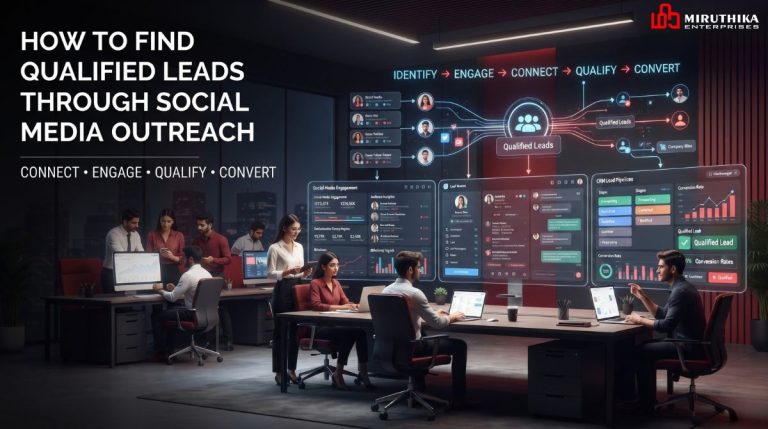
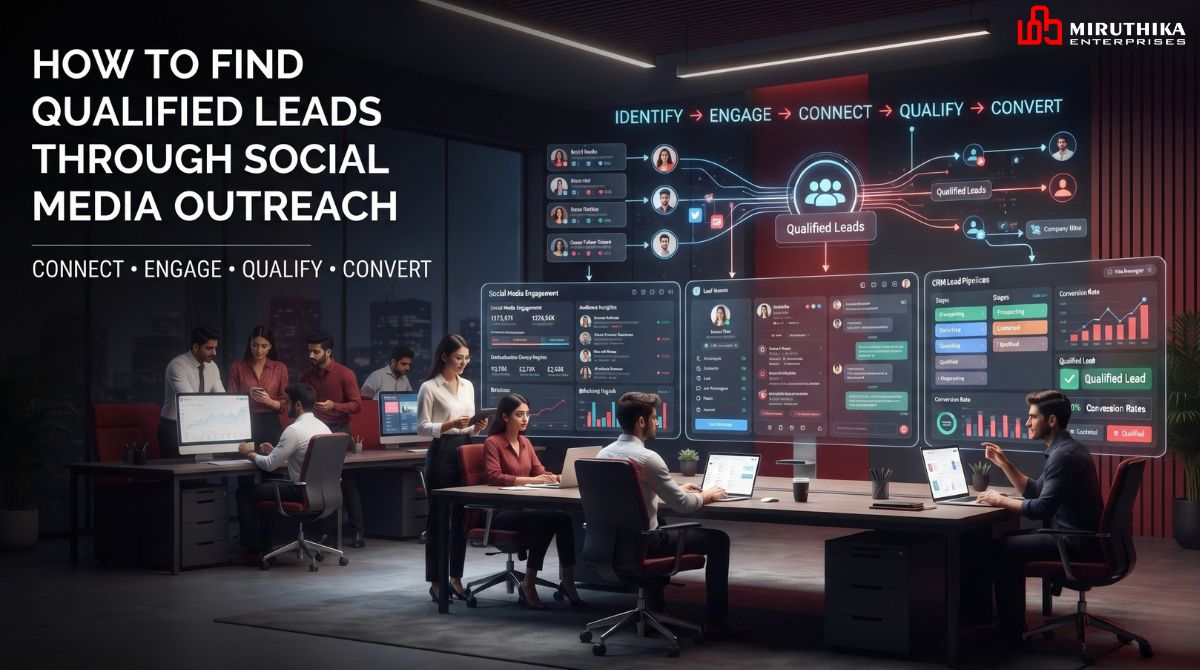
Qualified Leads Through Social Media Outreach is no longer used only for brand awareness and audience engagement. For businesses, it can also become an effective channel for finding potential customers, starting meaningful conversations, and generating qualified leads.
However, simply posting regularly or sending promotional messages to hundreds of people does not guarantee quality leads. Successful social media outreach requires the right audience, relevant content, personalized communication, and consistent follow-up.
This guide explains how businesses can use social media outreach to identify qualified prospects and turn conversations into genuine business opportunities.
What Is Social Media Outreach?
Qualified Leads Through Social Media Outreach Social media outreach is the process of connecting with potential customers, businesses, influencers, or decision-makers through platforms such as LinkedIn, Instagram, Facebook, and other relevant social networks.
The purpose is not always to make an immediate sale. Outreach can involve:
- Starting conversations with potential customers
- Sharing useful information
- Introducing products or services
- Building professional relationships
- Promoting valuable content
- Generating inquiries
- Developing long-term business connections
A successful outreach strategy focuses on relevance and relationship building rather than sending the same promotional message to everyone.
What Is a Qualified Lead?
A qualified lead is a potential customer who has a reasonable possibility of becoming a customer because they match important criteria such as need, interest, budget, location, industry, or decision-making authority.
For example, if a digital marketing agency provides SEO services for small and medium-sized businesses, a business owner who is actively looking for SEO support may be more relevant than someone who has no interest in digital marketing.
Qualified leads generally have some combination of:
- A genuine business need
- Interest in your product or service
- Relevant budget
- Appropriate location or market
- Authority to make or influence purchasing decisions
- A suitable timeline
Understanding these characteristics helps businesses focus their outreach efforts on people who are more relevant.
Define Your Ideal Customer Profile
Before starting social media outreach, clearly define who you want to reach.
Your ideal customer profile can include:
Industry
Identify the industries that are most relevant to your product or service.
For example:
- Healthcare
- Education
- E-commerce
- Real estate
- Fitness
- Manufacturing
- Professional services
Location
Decide whether your business serves customers locally, nationally, or internationally.
A Chennai-based service provider, for example, may focus its outreach on businesses in Chennai, OMR, Kelambakkam, Siruseri, and surrounding areas.
Job Role
For B2B outreach, identify the people who influence purchasing decisions.
Examples include:
- Business owners
- Founders
- Marketing managers
- HR managers
- Operations managers
- Marketing directors
Business Need
Understanding the customer’s problem is particularly important.
Instead of simply asking, “Who might buy my service?”, consider:
“Who currently has a problem that my service can help solve?”
This approach makes outreach more relevant and meaningful.
Choose the Right Social Media Platform
Not every social media platform is equally useful for every business.
LinkedIn can be useful for B2B outreach because businesses can identify professionals, decision-makers, founders, and companies based on professional information.
Instagram can work well for visually driven industries such as:
- Fitness
- Fashion
- Beauty
- Food
- Photography
- Branding
- E-commerce
- Lifestyle businesses
Facebook can be useful for local businesses, communities, groups, service providers, and businesses targeting specific consumer segments.
X and Other Platforms
Other platforms can be useful depending on your industry, audience, and content strategy. The key is to identify where your potential customers are actually active instead of trying to use every platform simultaneously.
Optimize Your Social Media Profile
Before reaching out to potential customers, make sure your profile looks professional.
A prospect may check your profile before responding to your message.
Your profile should clearly communicate:
- Who you are
- What your business does
- Who you help
- What services or products you provide
- How people can contact you
Use a professional profile image, relevant description, business information, website link, and examples of your work where appropriate.
Your profile should build enough trust for a prospect to understand why they should continue the conversation.
Create Content That Attracts Qualified Leads
Content can help potential customers discover your expertise before you contact them directly.
Create content around the problems your target audience faces.
For example, a digital marketing agency could create content about:
- SEO mistakes
- Website conversion problems
- Social media marketing
- Google ranking strategies
- Content marketing
- Meta Ads
- Local SEO
- Website performance
Instead of only promoting your services, provide useful information that demonstrates your knowledge.
This can make your social media outreach more natural because prospects can see your expertise before they receive a message.
Research Prospects Before Contacting Them
One of the biggest mistakes in social media outreach is sending the same message to everyone.
Before contacting a prospect, spend a few minutes understanding who they are.
Look at:
- Their profile
- Their business
- Recent posts
- Website
- Industry
- Current challenges
- Products or services
- Recent business activity
This information can help you create a more relevant message.
For example, instead of:
“Hello, we provide digital marketing services. Do you need SEO?”
You could write:
“Hi, I noticed that your business recently expanded its online presence. I had a look at your website and noticed a few areas where SEO and content optimization could potentially improve search visibility. Happy to share a few observations if useful.”
The second approach starts a conversation instead of immediately pushing a sales pitch.
Personalize Your Outreach Messages
Personalization is one of the most important parts of effective social media outreach.
A personalized message should demonstrate that you understand something about the prospect.
You can personalize based on:
- Their name
- Business name
- Industry
- Recent post
- Website
- Product
- Business announcement
- Specific problem
However, personalization should feel genuine. Simply adding someone’s first name to a generic sales message is not meaningful personalization.
Focus on the Prospect’s Problem
People are generally more interested in solutions to their problems than in a list of your services.
Instead of saying:
“We offer SEO, web development, social media marketing, branding, and advertising.”
Focus on the outcome or problem:
“We help businesses improve their organic search visibility and generate more relevant website traffic through SEO.”
This makes your message easier to understand and keeps the conversation focused on the prospect.
Use a Simple Outreach Message Structure
A practical outreach message can follow this structure:
1. Personal Introduction
Mention the person’s name or business.
2. Relevant Observation
Mention something specific about their business or online presence.
3. Potential Problem or Opportunity
Explain what you noticed without making exaggerated claims.
4. Helpful Solution
Briefly explain how you may be able to help.
5. Simple Call to Action
Ask a low-pressure question.
For example:
Hi [Name], I came across your business while researching companies in [industry]. I noticed that you are actively building your online presence. We work with businesses on SEO and digital marketing, and I noticed a few areas that could potentially be improved. Would you be interested in a few quick suggestions?
This approach creates an opportunity for conversation without forcing an immediate sales decision.
Use Social Media Engagement Before Direct Outreach
You don’t always have to start with a direct message.
You can first engage naturally with a prospect’s content by:
- Liking relevant posts
- Leaving useful comments
- Sharing helpful information
- Responding to questions
- Participating in industry discussions
This can help establish familiarity before direct outreach.
The engagement should be genuine rather than performed only to get attention.
Use Social Listening to Find Potential Leads
Social listening involves monitoring conversations, keywords, questions, and discussions related to your industry.
For example, a web development company could monitor conversations involving:
- Website redesign
- Website development
- E-commerce website
- Slow website
- SEO problems
- Online business
- Digital marketing
When someone publicly asks for help with a relevant problem, you may have an opportunity to provide useful information or begin a professional conversation.
Qualify Leads During the Conversation
Not every person who responds is a qualified lead.
After starting a conversation, understand their situation before moving toward a sales discussion.
You can ask questions such as:
- What are you currently trying to achieve?
- What challenge are you facing?
- Are you currently using a solution for this?
- What is your expected timeline?
- Who is involved in the decision?
- What type of support are you looking for?
These questions help determine whether the prospect is genuinely relevant.
Use a Lead Qualification System
Create simple categories for your leads.
Hot Lead
The prospect has a clear need and is actively considering a solution.
Warm Lead
The prospect has interest but may need more information or time.
Cold Lead
The prospect has limited interest or does not currently have a relevant need.
This classification helps your team prioritize follow-ups without treating every contact as an immediate sales opportunity.
Follow Up Without Being Pushy
Many prospects do not respond to the first message. That doesn’t necessarily mean they are not interested.
They may be:
- Busy
- Travelling
- Reviewing the message later
- Waiting for internal approval
- Not ready to make a decision
A polite follow-up can be useful.
For example:
Hi [Name], just following up on my previous message. If improving your online visibility is currently a priority, I’d be happy to share a few ideas. No problem if the timing isn’t right.
Avoid sending repeated messages every day. Give the prospect reasonable time and respect their response—or lack of response.
Use a CRM to Organize Leads
As your outreach grows, manually tracking every conversation can become difficult.
A CRM or lead-management system can help you record:
- Prospect name
- Company
- Platform
- Contact date
- Conversation status
- Business requirement
- Follow-up date
- Lead qualification
- Next action
This prevents important conversations from being forgotten.
Track Social Media Outreach Performance
You should measure the performance of your outreach strategy rather than focusing only on the number of messages sent.
Important metrics include:
- Number of prospects contacted
- Response rate
- Positive response rate
- Qualified leads
- Meetings booked
- Website visits
- Conversion rate
- Cost per lead
- Sales generated
For example, sending 500 messages is not necessarily meaningful if only a small number of relevant prospects respond. Quality and relevance should be considered alongside volume.
A consistent strategy for qualified leads through social media outreach can help businesses connect with prospects who are genuinely interested in their services.
Improve Your Outreach Through Testing
Different audiences may respond differently to different approaches.
You can test:
- Message length
- Opening sentence
- Call to action
- Personalization level
- Target industry
- Target job role
- Content topics
- Follow-up timing
Keep track of what happens after each change.
The goal is not to send more messages simply for the sake of volume. The goal is to understand which approaches generate relevant conversations.
Common Social Media Outreach Mistakes
Sending Mass Messages
Copying and pasting the same message to hundreds of people can make your outreach look automated and irrelevant.
Being Too Promotional
Starting a conversation with a long sales pitch can discourage prospects from responding.
Ignoring the Prospect’s Needs
Talking only about your business without understanding the prospect’s situation reduces the relevance of your message.
Not Following Up
Some genuine opportunities may be missed because there is no structured follow-up process.
Over-Following Up
Repeated messages can become intrusive. Respect the prospect’s time and preferences.
Focusing Only on Quantity
A large contact list does not automatically mean a large number of qualified leads.
Build Long-Term Relationships
Effective social media outreach should not always be focused on immediate sales.
A prospect who isn’t ready today may become interested in your services later.
Continue providing useful content, participating in relevant conversations, and maintaining professional relationships.
Over time, consistent value and communication can help build trust with your audience.
Conclusion
Finding qualified leads through social media outreach requires more than sending promotional messages. Businesses need to identify their ideal customers, choose relevant platforms, create useful content, research prospects, personalize communication, qualify conversations, and follow up professionally.
The most effective approach is to focus on relevance, value, and genuine conversations. By combining a clear target audience with consistent content and organized outreach, businesses can create a more structured process for discovering and nurturing potential customers.
About the Author