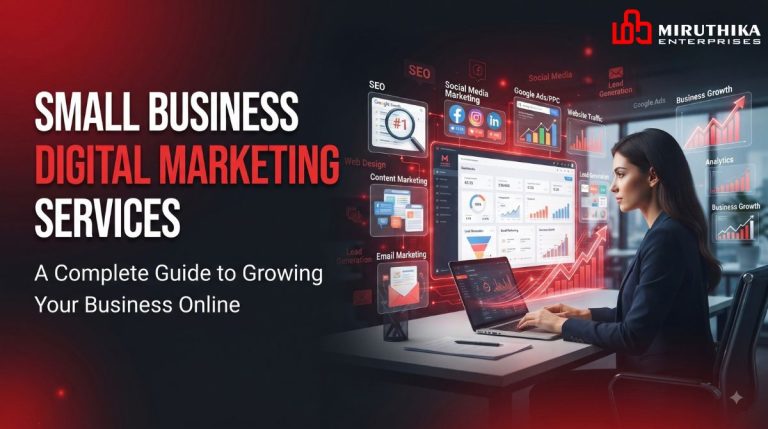
Artificial Intelligence (AI) is transforming how small businesses plan, manage, and improve their digital marketing activities. From creating content and analyzing customer behavior to optimizing advertising campaigns and automating repetitive tasks, AI-powered tools are helping businesses work more efficiently and make better marketing decisions.
In the past, many advanced marketing activities required large budgets, specialized teams, and considerable time. Today, small businesses can use AI tools to support content creation, search engine optimization (SEO), social media management, email marketing, and customer communication.
However, AI is not a replacement for human creativity, business knowledge, or customer relationships. The best results come from combining AI technology with a clear marketing strategy and a genuine understanding of customer needs.
This article explains how AI is changing digital marketing for small businesses, the benefits it offers, practical applications, common challenges, and ways to use AI effectively.
What Is AI in Digital Marketing?
AI in digital marketing refers to using artificial intelligence technologies to analyze data, generate content, identify patterns, automate tasks, and support marketing decisions.
These technologies can help businesses understand their audiences, personalize communication, improve campaign performance, and reduce the time spent on repetitive activities.
Common AI applications in digital marketing include:
- AI-powered content generation
- Search engine optimization assistance
- Social media content planning
- Advertising campaign optimization
- Customer behavior analysis
- Chatbots and customer support
- Email personalization
- Marketing performance reporting
- Audience segmentation
- Predictive analytics
For example, a small business can use an AI tool to brainstorm blog topics, prepare a first draft of a social media caption, analyze campaign data, or develop customer support responses.
The business should still review the output to ensure it is accurate, relevant, and aligned with its brand.
1. AI Is Making Content Creation Faster
Content marketing is an important part of digital marketing, but consistently producing useful content can be challenging for small businesses with limited resources.
AI tools can help marketers generate ideas, organize information, create outlines, and prepare initial drafts for different platforms.
How Businesses Can Use AI for Content
Businesses can use AI to support:
- Blog topic research and article outlines
- Social media captions
- Email newsletters
- Product descriptions
- Advertising copy
- Video scripts
- Frequently asked questions
- Content calendars
For example, a local fitness studio can use AI to brainstorm blog topics about beginner workouts, prepare social media post ideas, and organize a monthly content calendar.
A digital services company can use AI to develop article outlines about website development, branding, and online marketing.
Why Human Editing Still Matters
AI-generated content may contain inaccurate information, repetitive wording, or generic advice. Businesses should review every draft, add real experience, verify facts, and make the content useful to their intended audience.
The goal is not simply to publish more content. It is to publish content that answers customer questions and provides genuine value.
2. AI Is Improving Search Engine Optimization
Search engine optimization helps businesses improve their visibility in search results and attract relevant visitors to their websites.
AI-powered tools can support SEO research, content planning, website analysis, and performance monitoring.
AI for Keyword Research
AI can help marketers brainstorm keyword ideas based on a business’s services, audience, and industry.
For example, a web development company might explore search topics such as:
- Website development services for small businesses
- Affordable business website design
- E-commerce website development
- Website maintenance services
- Local web design companies
These ideas can help create a starting list for keyword research. Search volume, competition, search intent, and relevance should still be checked using appropriate SEO tools.
AI for Content Optimization
AI can help identify opportunities to improve website content, including:
- Organizing headings
- Improving readability
- Identifying missing topics
- Writing draft meta descriptions
- Suggesting internal links
- Finding content gaps
- Updating outdated information
AI and Search Visibility
AI can support SEO workflows, but it does not guarantee higher rankings. Search visibility still depends on content quality, relevance, technical accessibility, competition, website experience, and other factors.
Businesses should use AI to improve the usefulness of their websites rather than producing large amounts of repetitive content solely to target keywords.
3. AI Is Transforming Social Media Marketing
Managing social media accounts requires regular planning, content creation, publishing, audience interaction, and performance analysis.
AI tools can help small businesses organize these activities and maintain a more consistent online presence.
AI-Powered Social Media Content
Businesses can use AI to develop:
- Post ideas
- Caption drafts
- Hashtag suggestions
- Short-form video scripts
- Content calendars
- Campaign themes
- Audience-specific messaging
For example, a small retail business can create separate content ideas for product launches, customer questions, seasonal promotions, and educational posts.
AI can also help adapt a single idea into different formats for Instagram, Facebook, LinkedIn, or other platforms.
Improving Audience Engagement
AI-powered analytics can help identify which posts attract attention, encourage engagement, or generate website visits.
Businesses can use these insights to refine their content strategy.
However, genuine customer engagement still requires human judgment. Personal replies, customer feedback, and community relationships should not be replaced entirely by automated messages.
4. AI Is Making Digital Advertising More Efficient
Digital advertising platforms increasingly use machine learning to support audience targeting, delivery, bidding, and campaign optimization.
These capabilities can help small businesses manage advertising campaigns more efficiently, although results depend on campaign setup, data quality, budget, and the offer itself.
AI for Advertising Copy
AI can help marketers create different versions of advertising headlines, descriptions, and calls to action.
For example, a business promoting website development services could test messages focused on:
- Professional business websites
- Mobile-friendly website experiences
- E-commerce functionality
- Website redesign services
Different messages can then be evaluated against the campaign’s actual objectives.
AI for Campaign Optimization
Advertising platforms may use automated systems to help optimize campaign delivery based on selected objectives and available signals.
Marketers can use performance data to evaluate:
- Click-through rate
- Cost per click
- Cost per lead
- Conversion rate
- Return on advertising spend
AI tools can support analysis, but businesses should monitor spending, verify tracking, review audience quality, and avoid assuming that automated recommendations are always appropriate.
5. AI Is Enabling More Personalized Marketing
Customers are more likely to engage with marketing that matches their interests, needs, and stage in the buying process.
AI can help businesses organize customer information and develop more relevant messages for different audience segments.
Examples of Personalized Marketing
A business might create different email campaigns for:
- New website visitors
- Existing customers
- People who requested a quotation
- Customers interested in a specific service
- Customers who have not engaged recently
AI can help draft suitable messages for each group and recommend content based on available information.
Why Personalization Matters
Relevant communication can make marketing more useful and help businesses build stronger customer relationships.
However, personalization should respect customer privacy. Businesses should collect only necessary information, follow applicable privacy requirements, and avoid using sensitive personal data without an appropriate basis.
6. AI Chatbots Are Improving Customer Support
Small businesses often have limited staff available to answer customer questions throughout the day.
AI-powered chatbots can assist with common queries and help customers find relevant information.
What Can AI Chatbots Do?
Depending on their configuration, chatbots can:
- Answer frequently asked questions
- Explain business services
- Share business hours
- Guide users to relevant website pages
- Collect contact details with appropriate consent
- Help customers begin an enquiry
- Direct complex questions to a human representative
For example, a website development agency can use a chatbot to explain its services and direct potential customers to a contact form.
Why Human Support Is Still Important
Chatbots can misunderstand questions or provide incorrect answers. Businesses should establish clear limits, regularly review chatbot responses, and provide a straightforward way to contact a human when needed.
7. AI Is Supporting Better Customer Data Analysis
Marketing decisions become more effective when businesses understand what customers do and which activities contribute to results.
AI-assisted analytics can help marketers identify patterns across website traffic, advertising campaigns, email engagement, and customer enquiries.
Important Marketing Insights
Businesses can analyze:
- Which channels generate website visitors
- Which campaigns produce qualified leads
- Which pages attract the most engagement
- Where visitors leave a website
- Which content encourages enquiries
- How marketing costs compare with conversions
For example, if a company receives many website visits but very few enquiries, it can investigate whether the landing page clearly explains its services, builds trust, and provides an effective call to action.
AI may help summarize patterns in the available data, but businesses must verify the underlying information before making decisions.
8. AI Is Helping Small Businesses Generate and Qualify Leads
Lead generation involves attracting potential customers and encouraging them to take an action, such as requesting a quotation, booking a consultation, or submitting an enquiry.
AI can support several stages of this process.
Finding Potential Customers
AI-assisted research can help businesses identify relevant industries, customer problems, and audience segments.
Improving Lead Forms
AI can help review enquiry forms and suggest ways to make them easier to understand and complete.
Supporting Lead Qualification
Businesses can use clearly defined criteria to categorize leads according to factors such as service requirements, budget range, project timeline, and business suitability.
Prioritizing Follow-Ups
CRM systems with AI features may help summarize conversations, identify unanswered enquiries, and recommend follow-up tasks.
AI should support these decisions rather than automatically assuming that every lead is suitable. Staff should review important recommendations and ensure that customer information is handled responsibly.
9. AI Is Making Email Marketing More Effective
Email marketing remains a useful channel for sharing information, nurturing leads, and maintaining customer relationships.
AI can help businesses plan email campaigns and tailor messages to different audiences.
Common AI Applications in Email Marketing
- Drafting email subject lines
- Preparing newsletter content
- Personalizing message drafts
- Segmenting audiences
- Suggesting send-time experiments
- Summarizing campaign performance
- Identifying opportunities to improve engagement
For example, a business can use AI to prepare an email sequence for people who requested information about its services.
Before sending messages, businesses should verify the content, use appropriate consent and unsubscribe practices, and avoid misleading subject lines.
10. AI Is Helping Businesses Save Time and Resources
Small businesses often have to manage marketing alongside sales, customer support, operations, and administration.
AI can reduce time spent on certain repetitive tasks and help teams focus on higher-value activities.
Tasks That AI Can Support
| Marketing task | How AI can help |
|---|---|
| Content planning | Generate topic ideas and outlines |
| SEO | Suggest keywords and content improvements |
| Social media | Draft captions and content calendars |
| Advertising | Create copy variations and summarize results |
| Customer support | Answer routine questions |
| Email marketing | Draft newsletters and subject lines |
| Reporting | Summarize performance data |
| Lead management | Organize notes and suggest follow-ups |
These benefits depend on the tools selected, the quality of instructions, and how carefully the results are reviewed.
AI may reduce some workload, but businesses still need to account for software costs, staff training, implementation, and quality control.
11. Challenges of Using AI in Digital Marketing
Although AI provides useful opportunities, businesses should understand its limitations before relying on it.
Inaccurate Information
AI tools can produce incorrect claims, outdated details, or invented information. Always verify facts, especially in technical, legal, financial, or health-related content.
Generic Content
Content created without business-specific details may sound similar to competitors’ content. Add real examples, original insights, customer questions, and practical experience.
Privacy and Data Security
Avoid entering confidential customer records, passwords, private business information, or sensitive personal data into tools that are not approved for that use.
Over-Automation
Automating every interaction can make customer communication feel impersonal. Use automation for repetitive tasks while keeping human involvement in important conversations and decisions.
Unclear Return on Investment
Using AI does not automatically improve sales. Track the time saved, cost per lead, conversion rate, content performance, and customer satisfaction to evaluate whether a tool is worthwhile.
12. How Small Businesses Can Start Using AI
Businesses do not need to automate every marketing activity at once. A gradual approach can help them understand what works.
Step 1: Identify a Marketing Challenge
Choose one specific problem, such as spending too much time on social media captions, struggling to plan blog topics, or responding slowly to routine enquiries.
Step 2: Select a Suitable Tool
Choose a tool that addresses the problem and fits the business’s budget, workflow, and privacy requirements.
Step 3: Start With a Small Task
Use AI for one manageable activity, such as generating blog outlines, preparing caption drafts, or summarizing campaign results.
Step 4: Review Every Output
Check facts, tone, relevance, formatting, brand consistency, and privacy considerations before using AI-generated work.
Step 5: Measure the Results
Compare the workflow before and after introducing AI. Look at time saved, output quality, engagement, lead quality, and cost where relevant.
Step 6: Improve Gradually
Keep the processes that provide measurable value, refine those that need improvement, and stop using tools that do not support the business’s goals.
13. The Future of AI in Digital Marketing
AI is likely to continue influencing content production, marketing analytics, advertising workflows, personalization, and customer service.
As tools develop, small businesses may find it easier to connect data from different marketing channels and automate more routine processes.
However, successful marketing will continue to require strategic thinking, creativity, trust, and a clear understanding of customers.
Businesses that combine AI capabilities with original content, responsible data practices, and human expertise will be better positioned to adapt to changes in the digital marketing landscape.
Conclusion
AI is changing digital marketing for small businesses by making content creation, SEO research, social media planning, advertising analysis, personalization, customer support, and lead management more accessible.
These tools can help businesses save time, organize their marketing activities, and make more informed decisions. However, AI is most effective when it supports a clear strategy rather than replacing human judgment.
Small businesses should begin with practical use cases, review AI-generated outputs carefully, protect customer information, and measure the results.
About the Author