
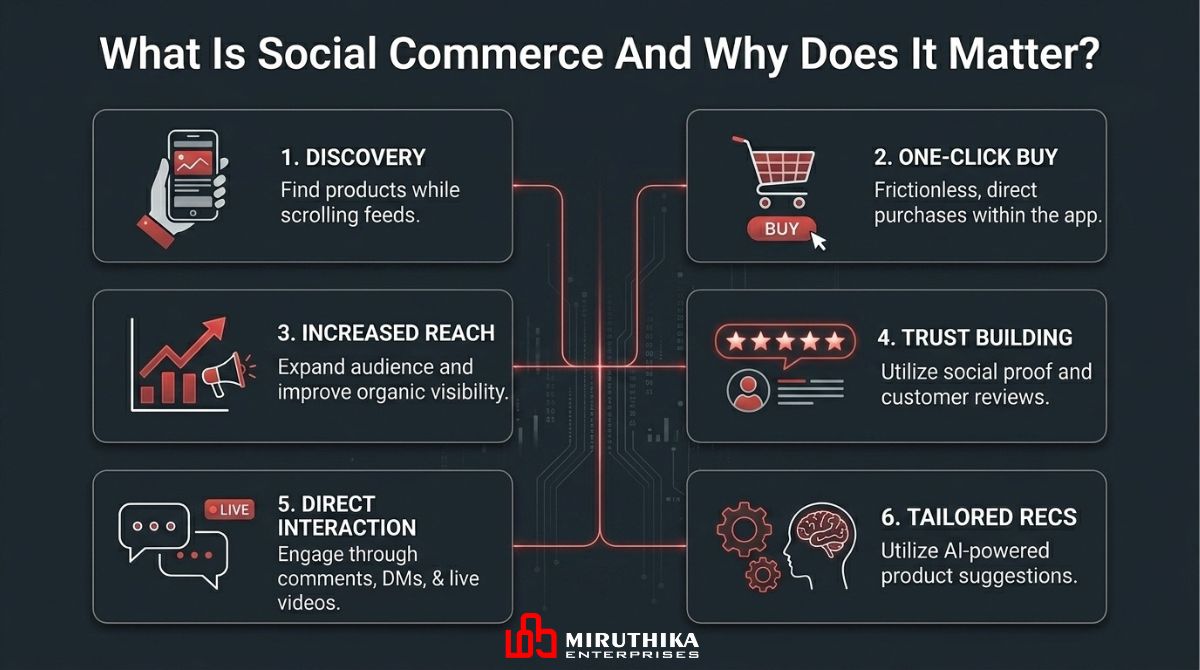
Social media is no longer just a platform for sharing photos, videos, and updates with friends. Today, it has evolved into a powerful business ecosystem where brands can market, engage, and sell products directly to consumers. This transformation has given rise to one of the fastest-growing trends in digital marketing — Social Commerce.
From Instagram Shops and Facebook Marketplace to TikTok Shop and Pinterest Buyable Pins, social commerce is reshaping how consumers discover and purchase products online. Businesses of all sizes are now investing in social commerce strategies to improve customer engagement, increase conversions, and grow revenue.
In this blog, we’ll explore what social commerce is, why it matters, its benefits, current trends, and how businesses can use it effectively to stay ahead in the competitive digital marketplace.
What Is Social Commerce?
Social commerce refers to the process of buying and selling products directly through social media platforms. Unlike traditional eCommerce, where customers are redirected to an external website, social commerce allows users to complete the entire shopping journey within the social media app itself.
This includes:
- Discovering products
- Reading reviews
- Viewing influencer recommendations
- Communicating with brands
- Making purchases directly on social platforms
Popular social commerce platforms include:
- Instagram Shopping
- Facebook Shops
- TikTok Shop
- Pinterest Shopping
- YouTube Shopping
Social commerce combines the power of social media marketing and online shopping to create a seamless customer experience.
The Rise Of Social Commerce
The rapid growth of smartphones, mobile shopping, and social media usage has fueled the popularity of social commerce. Consumers spend several hours daily on social platforms, making them ideal spaces for brands to connect with their audience.
Today’s consumers want:
- Fast shopping experiences
- Personalized recommendations
- Instant communication
- Social proof before buying
Social commerce fulfills all these expectations in one place.
According to industry reports, global social commerce sales are expected to grow significantly over the next few years as businesses increasingly adopt mobile-first digital marketing strategies.
Why Social Commerce Matters
1. Consumers Spend More Time On Social Media
People now discover products while scrolling through Instagram Reels, Facebook feeds. Social media has become a modern product search engine.
Businesses that integrate shopping into social media platforms can reach potential customers where they already spend their time.
2. Improves Customer Experience
Traditional eCommerce often requires multiple steps:
- Click ad
- Visit website
- Search product
- Add to cart
- Checkout
Social commerce simplifies this process by enabling customers to purchase products directly within the platform, reducing friction and improving conversions.
3. Increases Brand Visibility
Social commerce helps brands:
- Reach wider audiences
- Improve engagement
- Increase organic visibility
- Generate user-generated content
Features like hashtags, influencer collaborations, and viral videos help products gain massive exposure quickly.
4. Builds Trust Through Social Proof
Consumers trust recommendations from:
- Influencers
- Reviews
- Customer testimonials
- User-generated content
Social commerce platforms showcase real customer experiences, which significantly impacts purchase decisions.
Key Benefits Of Social Commerce
Higher Conversion Rates
Social commerce removes unnecessary steps in the buying process, leading to faster purchasing decisions and higher conversion rates.
Better Mobile Shopping Experience
Since most users access social media through smartphones, social commerce offers a mobile-friendly shopping experience optimized for convenience.
Personalized Product Recommendations
Platforms use AI algorithms to show users products based on:
- Interests
- Search history
- Engagement patterns
- Previous purchases
This improves customer satisfaction and increases sales opportunities.
Stronger Customer Engagement
Brands can interact directly with customers through:
- Comments
- Direct messages
- Live videos
- Polls
- Stories
This creates stronger relationships and improves customer loyalty.
Popular Social Commerce Platforms
Instagram Shopping
Instagram allows businesses to create product catalogs, tag products in posts, and enable in-app purchases. It’s highly effective for fashion, beauty, fitness, and lifestyle brands.
External Resource:
Instagram Shopping
Facebook Shops
Facebook Shops lets businesses create customizable online stores accessible through Facebook and Instagram.
External Resource:
Facebook Shops
TikTok Shop
TikTok has rapidly become a powerful social commerce platform due to its viral content and influencer-driven marketing.
External Resource:
TikTok Shop
Pinterest Shopping
Pinterest users often search for inspiration and purchase ideas, making it an excellent platform for visual product discovery.
External Resource:
Pinterest Shopping
Social Commerce vs Traditional eCommerce
| Social Commerce | Traditional eCommerce |
|---|---|
| Shopping within social apps | Shopping on websites |
| Highly interactive | Less social engagement |
| Influencer-driven | SEO & ads focused |
| Faster buying decisions | Longer purchase journey |
| Mobile-first experience | Website-first approach |
Both models are important, but social commerce offers faster engagement and stronger brand interaction.
How Influencer Marketing Supports Social Commerce
Influencers play a major role in social commerce success. Consumers often trust influencers more than traditional advertisements.
Benefits of influencer collaborations:
- Increased brand awareness
- Authentic product promotion
- Better audience targeting
- Higher engagement rates
- Improved conversion rates
Micro-influencers, especially, often generate strong trust and niche audience engagement.
Social Commerce Trends In 2026
Live Shopping
Brands now host live shopping events where products are demonstrated in real-time while viewers can purchase instantly.
AI-Powered Recommendations
Artificial intelligence helps platforms personalize shopping experiences based on user behavior and preferences.
Augmented Reality Shopping
AR allows customers to virtually try:
- Makeup
- Clothes
- Glasses
- Furniture
before purchasing.
Video Commerce
Short-form videos on platforms like TikTok and Instagram Reels are becoming major sales drivers.
How Businesses Can Succeed With Social Commerce
Create High-Quality Visual Content
Professional photos and engaging videos attract more attention and improve customer trust.
Focus On Mobile Optimization
Ensure:
- Fast loading pages
- Mobile-friendly checkout
- Vertical video content
- Responsive design
Use User-Generated Content
Encourage customers to:
- Share reviews
- Post photos
- Tag your brand
This improves credibility and organic reach.
Partner With Influencers
Collaborating with relevant influencers helps businesses reach highly targeted audiences effectively.
Use Social Proof
Display:
- Customer testimonials
- Ratings
- Reviews
- Before-and-after results
to build trust and increase conversions.
SEO Benefits Of Social Commerce
Social commerce can indirectly improve SEO by:
- Increasing brand visibility
- Driving traffic
- Generating backlinks
- Improving engagement
- Encouraging content sharing
Businesses should also optimize:
- Product descriptions
- Hashtags
- Social profiles
- Image ALT tags
- Video captions
for better discoverability.
Internal Link Example:
Explore our digital marketing solutions at
Miruthika Enterprises Digital Marketing Services
Challenges Of Social Commerce
While social commerce offers many benefits, businesses may face challenges such as:
- High competition
- Changing algorithms
- Customer trust issues
- Platform dependency
- Content consistency requirements
To succeed, businesses need a strong digital marketing strategy and continuous audience engagement.
The Future Of Social Commerce
Social commerce is expected to become one of the most important parts of digital marketing and online retail. As platforms continue integrating shopping features, businesses that adapt early will gain a competitive advantage.
Consumers increasingly prefer:
- Faster shopping experiences
- Personalized recommendations
- Interactive content
- Community-driven purchasing
Brands that combine creativity, social engagement, and seamless shopping experiences will thrive in the future of online commerce.
Final Thoughts
Social commerce is transforming how people discover, interact with, and purchase products online. It blends the power of social media marketing with the convenience of eCommerce, creating a highly engaging and efficient shopping experience.
For businesses, social commerce is no longer optional — it is an essential part of modern digital marketing. Whether you are a startup, local business, or established brand, investing in social commerce strategies can help increase visibility, improve customer relationships, and drive long-term growth.
As social media platforms continue evolving, businesses that embrace social commerce today will be better positioned to succeed in the future digital economy.
FAQ
What is social commerce?
Social commerce is the process of selling products directly through social media platforms like Instagram, Facebook, TikTok, and Pinterest.
Why is social commerce important?
Social commerce improves customer engagement, simplifies online shopping, and helps businesses increase sales through social media platforms.
Which platform is best for social commerce?
Popular platforms include Instagram Shopping, Facebook Shops, TikTok Shop, and Pinterest Shopping depending on the business niche and audience.
How does social commerce help businesses?
It helps businesses improve brand visibility, increase conversions, engage customers, and create seamless shopping experiences.
Is social commerce good for small businesses?
Yes, social commerce is highly beneficial for small businesses because it allows them to reach targeted audiences with lower marketing costs and higher engagement opportunities.
About the Author