
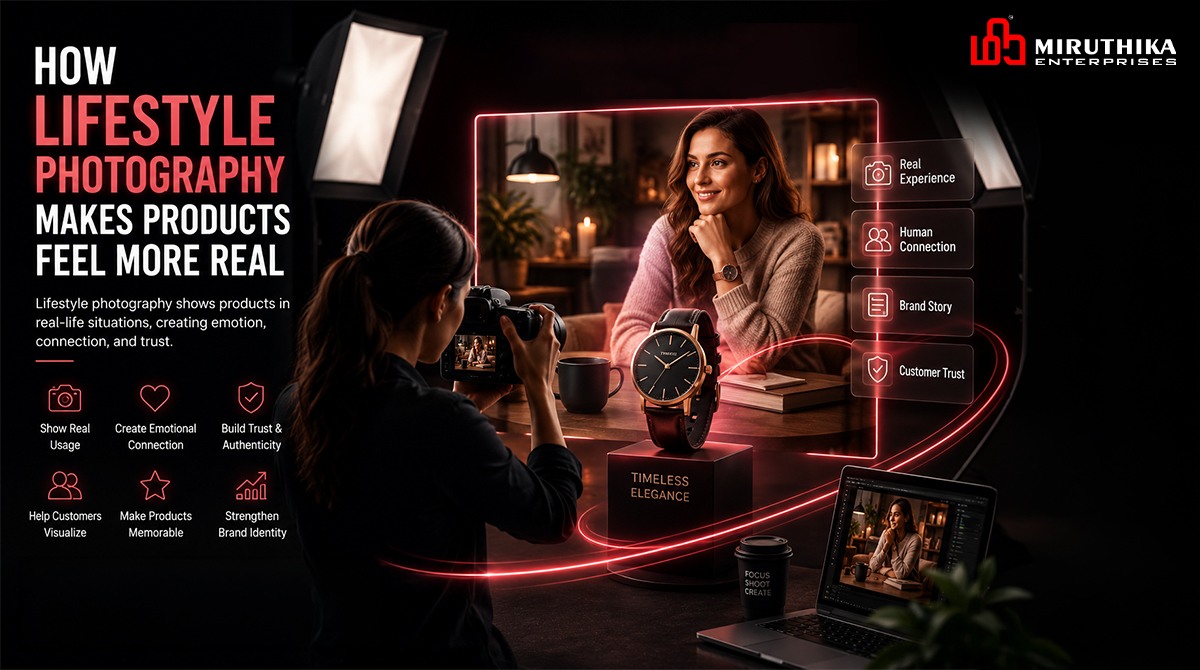
In today’s competitive digital marketplace, customers want more than simple product pictures. They want to understand how a product looks, feels, and fits into their everyday lives. This is where lifestyle photography becomes a powerful marketing tool.
Instead of displaying a product against a plain background, lifestyle photography places it in a realistic environment with people, surroundings, and situations that customers can relate to. This approach helps potential buyers imagine themselves using the product and creates a stronger emotional connection with the brand.
Whether you sell fashion, food, beauty products, electronics, home décor, fitness products, or lifestyle services, high-quality lifestyle photography can make your products appear more authentic, attractive, and trustworthy.
What Is Lifestyle Photography?
Lifestyle photography is a type of product photography that shows products being used in real-life or realistic situations.
For example, instead of photographing a coffee mug alone on a white background, a lifestyle photograph might show the mug on a breakfast table beside a laptop, notebook, and a person enjoying their morning coffee.
Similarly, a fitness brand could show its products being used during a workout rather than simply displaying the equipment on a studio background.
Lifestyle photography focuses on:
- Realistic environments
- Natural-looking situations
- Human interaction
- Product usage
- Emotions and experiences
- Brand personality
- Visual storytelling
The goal is to make the product feel like a natural part of the customer’s life.
Why Lifestyle Photography Is Important for Products
Customers cannot physically touch or try products when shopping online. They depend heavily on images to understand what they are buying.
A professional lifestyle image can communicate much more than the product itself.
It can show:
- How the product is used
- Where it can be used
- Who might use it
- What the experience feels like
- How the product fits into a lifestyle
This makes the product easier to understand and more memorable.
Lifestyle Photography Creates an Emotional Connection
People often make purchasing decisions based on emotions before they consider practical details.
A simple product photograph may show what the product looks like. Lifestyle photography can show how the customer might feel while using it.
For example, a skincare brand could show a person following a relaxing nighttime skincare routine. The image communicates more than the skincare product—it communicates relaxation, self-care, and confidence.
This emotional storytelling can encourage customers to connect with the brand.
It Helps Customers Visualize Product Usage
One of the biggest advantages of lifestyle photography is that it helps customers imagine using the product themselves.
Consider a furniture company selling a modern sofa.
A plain product image shows the sofa.
A lifestyle image can show the sofa inside a beautifully designed living room with people relaxing, reading, or spending time together.
The second image gives customers a better understanding of:
- Scale
- Usage
- Environment
- Style
- Comfort
- Overall appearance
This makes the purchasing experience more informative.
Lifestyle Photography Builds Product Authenticity
Customers increasingly look for authenticity when choosing brands.
Overly edited or unrealistic product images can sometimes create doubt. Lifestyle photography provides context and makes products appear more natural.
Authentic images can help communicate:
Real product + Real environment + Real experience = Stronger trust
This is particularly valuable for small businesses and emerging brands that need to establish credibility with new customers.
It Makes Products More Memorable
Thousands of products compete for attention online every day.
A basic product photograph can easily disappear among similar images. A creative lifestyle photograph can make a product visually distinctive.
For example, instead of simply photographing a watch, a brand could show the watch being worn during a business meeting, outdoor adventure, or evening event.
The environment adds a story to the product.
That story can make the image easier for customers to remember.
Lifestyle Photography Strengthens Brand Identity
Photography is an important part of visual branding.
Your photography style should reflect your brand personality.
A luxury brand may use:
- Elegant environments
- Dramatic lighting
- Premium materials
- Sophisticated styling
A fitness brand may use:
- Energetic environments
- Active models
- Bright natural lighting
- Dynamic compositions
A family-oriented brand may use:
- Warm environments
- Natural expressions
- Comfortable settings
- Everyday situations
Consistent lifestyle photography helps customers recognize your brand across different platforms.
Lifestyle Photography Improves Social Media Content
Social media platforms are highly visual.
Businesses need attractive content to capture attention while users scroll through their feeds.
Lifestyle photography can be used for:
- Instagram posts
- Instagram Stories
- Facebook posts
- Pinterest content
- Website banners
- Digital advertisements
- Promotional campaigns
- Product launches
A single professional photoshoot can produce multiple pieces of marketing content.
For example, one lifestyle shoot could generate:
- Product images
- Behind-the-scenes content
- Social media posts
- Advertising creatives
- Website banners
- Blog images
- Promotional graphics
This makes professional photography a valuable long-term content investment.
Lifestyle Photography Can Increase Ecommerce Conversions
For ecommerce businesses, product images play an important role in the customer journey.
Customers often evaluate products visually before reading detailed descriptions.
Using both traditional product photography and lifestyle photography provides a more complete shopping experience.
Product Photography
Shows:
- Product details
- Shape
- Color
- Features
- Packaging
Lifestyle Photography
Shows:
- Product usage
- Context
- Experience
- Scale
- Lifestyle appeal
Using both styles allows customers to understand the product from different perspectives.
How to Plan a Lifestyle Product Photoshoot
A successful lifestyle photoshoot requires more than simply taking pictures.
Proper planning helps ensure that the final images support your marketing goals.
1. Define Your Target Audience
Before planning the shoot, understand who you are trying to reach.
Consider:
- Age group
- Lifestyle
- Interests
- Buying behavior
- Location
- Preferences
- Problems they want to solve
Your models, location, styling, and visual tone should match your target audience.
2. Define the Purpose of the Photos
Decide where the photographs will be used.
For example:
- Ecommerce website
- Facebook Ads
- Website homepage
- Brochure
- Product catalogue
- Blog
- Digital advertising
Knowing the purpose helps determine the required image composition and dimensions.
3. Select the Right Location
The location should support the product story.
A home décor product may work well inside a stylish home.
A fitness product could be photographed in:
- A gym
- Outdoor workout space
- Home fitness environment
A travel product could be photographed in an outdoor or travel-oriented setting.
The location should look realistic while complementing the product.
4. Choose Suitable Models
Models should match your target audience and brand identity.
Natural expressions and realistic interactions are usually more effective than overly posed photographs.
The goal is to make customers think:
“I can imagine myself using this product.”
5. Plan the Styling
Every visual element matters.
Pay attention to:
- Clothing
- Background
- Props
- Furniture
- Accessories
- Product placement
- Colors
- Lighting
Avoid unnecessary elements that distract attention from the product.
Use Storytelling in Product Photography
Great lifestyle photography tells a story.
Instead of asking:
“How can we photograph this product?”
Ask:
“What story can we tell using this product?”
For example, a coffee brand could tell a simple morning story:
Wake up → Prepare coffee → Enjoy the moment → Start the day
The product becomes part of the story rather than simply being placed in front of the camera.
This makes the image more engaging and relatable.
Natural Lighting vs Studio Lighting
Lighting plays a major role in lifestyle photography.
Natural Lighting
Natural light can create:
- Authentic appearance
- Soft shadows
- Warm atmosphere
- Natural skin tones
- Realistic environments
It works particularly well for lifestyle-oriented brands.
Studio Lighting
Studio lighting provides greater control over:
- Brightness
- Shadows
- Highlights
- Product details
- Overall mood
Professional photographers may combine natural and artificial lighting depending on the creative direction.
Avoid Making Lifestyle Images Look Too Artificial
The biggest advantage of lifestyle photography is realism.
Avoid overly staged situations that look unnatural.
Models should interact naturally with the product.
For example, instead of asking someone to pose unnaturally while holding a smartphone, create a realistic situation where they are actually using the phone.
Natural expressions, gestures, and environments can make the final image more believable.
Lifestyle Photography for Different Industries
Lifestyle photography can work across many industries.
Fashion
Show clothing being worn in realistic environments.
Food & Beverage
Show products being enjoyed during meals, gatherings, or everyday moments.
Beauty
Show skincare and cosmetic products as part of realistic beauty routines.
Fitness
Show people using equipment or participating in workouts.
Home Décor
Place furniture and décor products inside attractive, realistic interiors.
Technology
Show devices being used at work, home, or during travel.
Travel
Show products being used during real travel experiences.
Ecommerce
Combine product images with lifestyle visuals to create a complete shopping experience.
Lifestyle Photography and Social Media Marketing
Professional lifestyle photography can give businesses a strong library of visual content for social media marketing.
Brands can create:
- Product launch posts
- Educational posts
- Promotional campaigns
- Seasonal content
- Customer-focused stories
- Reels and video concepts
- Advertisement creatives
High-quality visuals can also help maintain consistency across social platforms.
Lifestyle Photography and Advertising
Lifestyle images are particularly useful for digital advertising because they communicate the product quickly.
An effective advertisement can combine:
Strong visual + Clear message + Product benefit + Call to action
Instead of simply showing a product, the image can demonstrate the experience customers can expect.
This can make advertising content more engaging and relevant.
How Lifestyle Photography Supports Brand Storytelling
A strong brand is built around more than products.
It has a personality, message, values, and customer experience.
Lifestyle photography allows brands to communicate these elements visually.
For example:
Luxury brand → Sophisticated lifestyle
Fitness brand → Active lifestyle
Eco-friendly brand → Sustainable lifestyle
Family brand → Warm everyday experiences
This visual consistency helps strengthen brand recognition.
Common Lifestyle Photography Mistakes
Businesses should avoid several common mistakes.
Using Irrelevant Backgrounds
The background should support the product rather than distract from it.
Poor Lighting
Dark or inconsistent lighting can reduce image quality.
Over-Styling
Too many props can make the photograph confusing.
Unnatural Poses
Forced poses can make images feel artificial.
Ignoring Brand Colors
Visuals should complement the overall brand identity.
Focusing Only on the Product
Lifestyle photography should communicate the experience surrounding the product.
How Professional Photography Adds Business Value
Professional photography is not simply about creating beautiful images.
It can support several areas of business growth, including:
- Brand credibility
- Customer engagement
- Ecommerce presentation
- Social media marketing
- Advertising
- Website design
- Content marketing
- Product storytelling
High-quality visuals can make a business appear more professional and established.
Conclusion
Lifestyle photography makes products feel more real by placing them in relatable environments and showing how customers can use them in everyday life.
Instead of simply showing what a product looks like, lifestyle photography communicates its purpose, experience, personality, and emotional value.
When combined with professional product photography, strong branding, website design, and digital marketing, lifestyle photography can become a powerful part of a business’s visual marketing strategy.
For brands looking to create more authentic and engaging product content, investing in professionally planned lifestyle photography can help transform ordinary product images into compelling visual stories.
About the Author