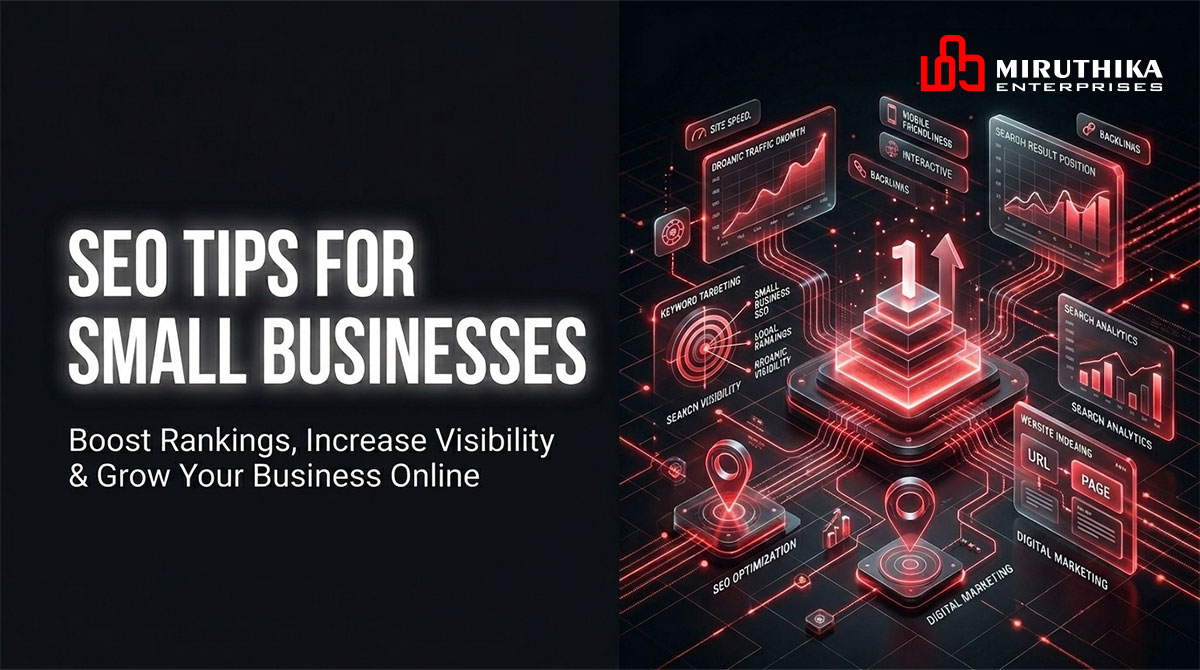
In today’s digital world, having a website alone is not enough. Small businesses need strong Search Engine Optimization (SEO) strategies to appear on Google search results, attract customers, and compete with larger brands online.
Whether you own a local shop, fitness studio, startup, or service business, SEO can help you generate organic traffic, increase visibility, and improve conversions without spending heavily on advertisements.
This guide explains practical SEO and AEO (Answer Engine Optimization) strategies for small businesses in a simple and effective way.
What is SEO?
SEO (Search Engine Optimization) is the process of improving a website so that it ranks higher on search engines like Google.
The goal of SEO is to:
- Increase website traffic
- Generate leads
- Improve online visibility
- Build trust and authority
- Get more sales organically
For small businesses, SEO is one of the most cost-effective digital marketing strategies.
What is AEO (Answer Engine Optimization)?
AEO stands for Answer Engine Optimization.
It focuses on optimizing content so search engines and AI tools can directly answer users’ questions.
Examples:
- Featured snippets
- Voice search results
- AI-generated search answers
- FAQ sections
- Conversational search results
AEO is becoming important because users now search using natural questions like:
- “Which is the best SEO company near me?”
- “How can small businesses rank on Google?”
- “What are affordable SEO strategies?”
Why SEO is Important for Small Businesses
1. Increases Online Visibility
Most customers search online before purchasing products or services. SEO helps your business appear when customers search for related keywords.
Example:
- “Best bakery in Chennai”
- “Affordable web design services”
- “Women fitness studio near me”
2. Generates Quality Leads
SEO brings targeted traffic from users actively searching for your services.
Unlike traditional advertising, SEO attracts customers with real buying intent.
3. Builds Brand Trust
Websites ranking on the first page of Google are often seen as more trustworthy and reliable.
Good SEO improves:
- Website authority
- Brand reputation
- Customer confidence
4. Long-Term Marketing Strategy
Paid ads stop generating traffic once the budget ends. SEO continues bringing visitors for months or years.
Essential SEO Tips for Small Businesses
1. Choose the Right Keywords
Keyword research is the foundation of SEO.
Focus on:
- Long-tail keywords
- Local keywords
- Service-specific keywords
- Question-based keywords
Example Keywords
Instead of:
- “SEO services”
Use:
- “Affordable SEO services for small businesses”
- “Best SEO company in Chennai”
- “Local SEO services near me”
Best Free Keyword Tools
- Google Keyword Planner
- Ubersuggest
- Answer The Public
2. Optimize Your Website Structure
A clean website structure helps both users and search engines.
Important Elements
- SEO-friendly URLs
- Fast loading pages
- Mobile responsiveness
- Proper headings (H1, H2, H3)
- Easy navigation
- Internal linking
Good URL Example
yourwebsite.com/seo-tips-small-business
Bad URL Example
yourwebsite.com/page?id=123
3. Create High-Quality Content
Content is one of the most important ranking factors.
Your content should:
- Solve user problems
- Answer common questions
- Be original and informative
- Include relevant keywords naturally
Best Content Types
- Blog posts
- Service pages
- Case studies
- Guides
- FAQs
- Tutorials
4. Optimize for Local SEO
Local SEO is extremely important for small businesses.
Steps to Improve Local SEO
Create a Google Business Profile
Optimize:
- Business name
- Phone number
- Address
- Services
- Business description
- Images
Create profile:
- Google Business Profile
Add Location Keywords
Examples:
- “Website design company in Chennai”
- “Best yoga studio in Kelambakkam”
Collect Customer Reviews
Positive reviews improve:
- Local rankings
- Customer trust
- Click-through rates
Ask satisfied customers to leave genuine reviews regularly.
5. Improve Website Speed
Page speed directly affects SEO and user experience.
Slow websites increase bounce rates.
Ways to Improve Speed
- Compress images
- Use WebP format
- Enable browser caching
- Use lightweight themes
- Minify CSS and JavaScript
Speed Testing Tools
- Google PageSpeed Insights
- GTmetrix
6. Use SEO-Friendly Images
Images improve engagement but must be optimized properly.
Image SEO Tips
- Use descriptive file names
- Add ALT text
- Compress image size
- Use responsive images
- Choose proper dimensions
Example
File Name:small-business-seo-tips.jpg
ALT Text:SEO tips for small businesses
7. Publish Blogs Consistently
Regular blogging helps websites rank faster.
Benefits of Blogging
- Increases indexed pages
- Targets multiple keywords
- Improves authority
- Generates backlinks
- Drives organic traffic
Recommended Blogging Frequency
- 2–4 blogs per month minimum
8. Focus on Mobile Optimization
Most users browse websites using smartphones.
Google uses mobile-first indexing, meaning the mobile version of your site matters most.
Mobile SEO Checklist
- Responsive design
- Fast mobile speed
- Easy navigation
- Readable fonts
- Clickable buttons
9. Build Quality Backlinks
Backlinks are links from other websites to your website.
They help search engines understand that your website is trustworthy.
Best Backlink Strategies
- Guest posting
- Local business directories
- Social profiles
- Blog submissions
- Infographics
- Industry listings
10. Use Internal Linking
Internal links connect pages within your website.
Benefits:
- Improves navigation
- Distributes SEO value
- Helps search engines crawl pages
- Increases time on site
Example:
Link blog articles to relevant service pages.
11. Add Schema Markup
Schema markup helps search engines understand your content better.
Schema improves:
- Rich snippets
- FAQ visibility
- Star ratings
- Business details
Important Schema Types
- Local Business Schema
- FAQ Schema
- Article Schema
- Product Schema
- Review Schema
Learn more:
- Schema.org
12. Optimize for Voice Search
Voice search is growing rapidly.
People use conversational queries like:
- “Which digital marketing agency is best near me?”
- “How do I improve local SEO?”
Voice Search Optimization Tips
- Use conversational content
- Add FAQ sections
- Target question-based keywords
- Use concise answers
13. Create AEO-Friendly Content
To improve Answer Engine Optimization:
Use Direct Answers
Answer questions clearly within the first paragraph.
Add FAQ Sections
FAQs improve:
- Featured snippets
- Voice search visibility
- AI search results
Use Structured Headings
Organized content helps AI systems understand your website.
14. Improve User Experience (UX)
SEO and user experience work together.
Improve UX By:
- Easy navigation
- Clean design
- Readable content
- Fast loading speed
- Clear CTA buttons
Better user experience improves:
- Engagement
- Conversion rate
- SEO rankings
15. Track SEO Performance
SEO requires continuous monitoring.
Important Metrics
- Organic traffic
- Keyword rankings
- Bounce rate
- Click-through rate
- Conversions
Best SEO Tracking Tools
- Google Analytics
- Google Search Console
Common SEO Mistakes Small Businesses Should Avoid
Keyword Stuffing
Adding too many keywords makes content unnatural.
Duplicate Content
Always create unique and valuable content.
Ignoring Mobile Users
Mobile optimization is mandatory.
Slow Website Speed
A slow website reduces rankings and conversions.
Poor Quality Backlinks
Avoid spammy backlink websites.
Best SEO Strategy for Faster Results
Month 1
- Keyword research
- Website optimization
- Technical SEO fixes
- Google Business Profile setup
Month 2
- Blog publishing
- Local SEO optimization
- Internal linking
- Backlink building
Month 3
- Content expansion
- Authority building
- FAQ optimization
- AEO improvements
Future of SEO for Small Businesses
SEO is evolving rapidly with AI-powered search engines and voice assistants.
Businesses focusing on:
- Helpful content
- User experience
- AEO optimization
- Local SEO
- Mobile-first design
will achieve better long-term rankings.
SEO is no longer just about keywords. It is about providing valuable answers and creating the best experience for users.
Conclusion
SEO is one of the most powerful tools for small businesses to grow online organically. With the right strategies, even small local businesses can compete with larger brands and attract targeted customers.
By combining SEO and AEO techniques such as keyword optimization, high-quality content, local SEO, FAQs, schema markup, and voice search optimization, businesses can improve search visibility and generate long-term growth.
Consistency is the key to SEO success. Focus on creating helpful content, optimizing your website regularly, and building trust with users and search engines.
FAQs
What is the best SEO strategy for small businesses?
The best SEO strategy includes keyword research, local SEO, content marketing, mobile optimization, and backlink building.
How long does SEO take to show results?
SEO usually takes 3–6 months for noticeable results depending on competition and website quality.
Why is local SEO important for small businesses?
Local SEO helps businesses appear in nearby searches and attract local customers actively searching for services.
What is AEO in digital marketing?
AEO (Answer Engine Optimization) focuses on optimizing content for direct answers in search engines, AI search, and voice search.
How often should small businesses publish blogs?
Publishing 2–4 high-quality blogs monthly is recommended for consistent SEO growth.
Does website speed affect SEO?
Yes. Faster websites improve user experience, reduce bounce rate, and help improve search rankings.
Can small businesses do SEO without paid ads?
Yes. Organic SEO can generate long-term traffic and leads without relying entirely on paid advertising.
What are the best free SEO tools?
Popular free SEO tools include:
- Google Search Console
- Google Analytics
- Ubersuggest
- Google Keyword Planner
- PageSpeed Insights
Why are FAQs important for SEO and AEO?
FAQs help websites rank for question-based searches, featured snippets, and voice search queries.
What is the most important SEO ranking factor?
High-quality content, user experience, backlinks, and search intent optimization are among the most important SEO factors today.
About the Author